About Dr. Carli Clark, Msc.D
I Don’t Just Look at Your Symptoms. I Look at the Whole Story.
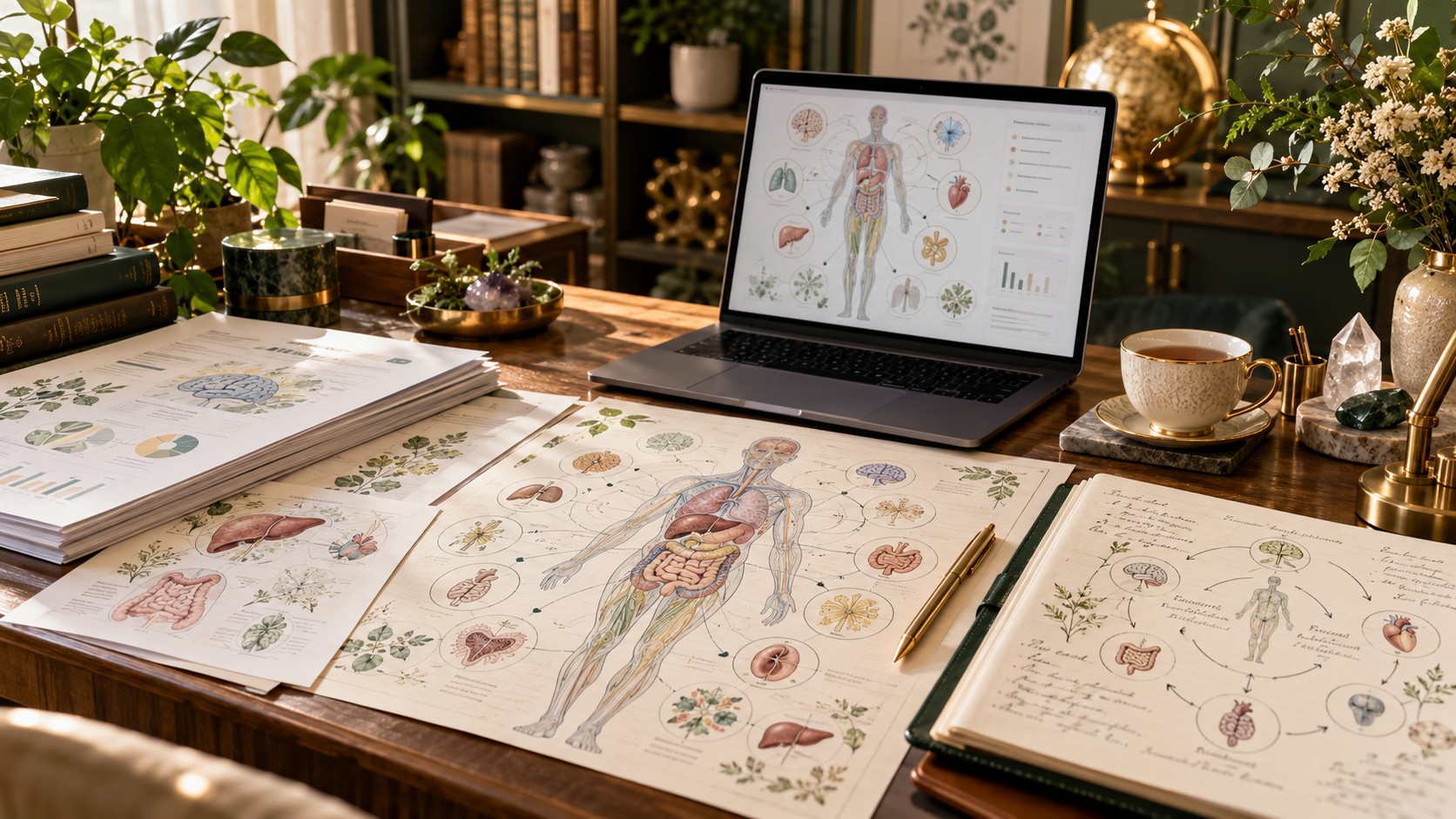
I’m Dr. Carli Clark, Msc.D., a Doctor of Metaphysical Sciences, Holistic Naturopathic Practitioner, Menopause Coach and Women’s Health Advisor.
At Radiant Revive Holistics, my approach is built around one fundamental principle:
You are more than one symptom, one hormone, one blood result or one diagnosis.
Your body is an interconnected system.
Hormones influence metabolism. Metabolic health influences hormonal health. The gut affects nutrient availability and immune function. Sleep affects blood sugar, appetite, mood and recovery. Stress influences the nervous system. Muscle affects metabolic health, glucose regulation, bone strength and healthy ageing.
And all of this is happening within the context of your life.
That is why I don’t look at symptoms in isolation.
I look at the whole health picture.
Menopause Is More Than Hormones
Understanding Menopause as a Whole-Body Transition
For many years, the conventional view of menopause has focused almost entirely on the ovaries running out of eggs and the resulting decline in oestrogen and progesterone.
Those hormonal changes are unquestionably important.
As ovarian function changes, ovulation becomes increasingly irregular, oestrogen and progesterone fluctuate and eventually decline, and signalling between the brain and ovaries changes.
These changes can contribute to hot flushes, night sweats, vaginal and urinary changes, sleep disturbance, mood changes, changes in body composition and declining bone protection.
But hormones are only one part of a much bigger picture.
Menopause does not occur in the ovaries alone.
It occurs within the entire body.
Hormonal changes interact continuously with:.
- Metabolic and blood-sugar health
- Muscle and body composition
- Brain and nervous-system function
- Cardiovascular health
- Liver and digestive function
- Immune and inflammatory pathways
- Sleep
- Nutrition
- Physical activity
- Stress and emotional wellbeing
This is why I believe menopause is better understood as a whole-body transition rather than simply a hormone deficiency.
Why Do Women Experience Menopause So Differently?
This is one of the most important questions in women’s health.
Two women of a similar age and at a similar stage of the menopause transition can have completely different experiences.
One may have relatively mild symptoms.
Another may struggle with severe hot flushes, insomnia, anxiety, fatigue, brain fog, weight gain, changing body composition and deteriorating metabolic health.
Hormones matter.
But they may not explain everything.
Every woman arrives at menopause carrying decades of physiology.
She brings with her:
- Her nutritional status.
- Her muscle mass.
- Her metabolic health.
- Her blood-sugar regulation.
- Her cardiovascular health.
- Her gut health.
- Her sleep history.
- Her physical activity.
- Her inflammatory status.
- Her medical history.
- Her stress load.
- Her life experiences.
When reproductive hormones begin changing, they are changing within that existing biological environment.
This may help explain why the experience of menopause varies so dramatically from one woman to another.
Instead of asking only:
“What are her hormone levels?”
I believe we also need to ask:
“How healthy is the woman as a whole, and what does her body need to navigate this transition well?”
How I Look at Your Health
At Radiant Revive Holistics, I do not look at symptoms in isolation.
If you come to me with fatigue, poor sleep, weight changes, brain fog, digestive issues, hair loss or hormonal symptoms, I do not automatically assume they are six separate problems — and I do not simply label everything as “menopause.”
I look at the whole picture.
That means bringing together your symptoms, health history, existing blood results and investigations, nutrition, digestion, hormones and life stage, sleep, stress, lifestyle, emotional wellbeing and holistic wellness findings.
Then I start asking how the different pieces may connect.
Could poor digestion be affecting nutrient absorption?
Could blood-sugar instability be influencing energy, hunger and weight?
Could changing menstrual patterns be contributing to nutrient depletion?
Could poor sleep be affecting recovery, appetite and metabolic health?
Could stress be amplifying symptoms?
Could perimenopause be intensifying something that was already developing?
This is especially important in midlife, when hormones, metabolism, muscle, gut health, sleep, stress and nutrient needs can all begin influencing one another more strongly.
My background in Metaphysical Science also means I recognise that health is not only physical. Your emotional experiences, relationships, stress, beliefs, life circumstances and sense of meaning can form part of the wider picture too.
That does not mean physical symptoms are dismissed or explained away. They still deserve appropriate physical assessment.
It simply means I look at you as a whole person.
Your symptoms matter.
Your results matter.
Your hormones matter.
But your story matters too.
That is the thinking behind my whole-person approach to women’s health and menopause.
Not Every Symptom Is Automatically Menopause
This is an important part of my work.
Fatigue is not automatically menopause.
Hair loss is not automatically menopause.
Weight gain is not automatically menopause.
Anxiety is not automatically menopause.
Brain fog is not automatically menopause.
Even hot flushes deserve context.
Many symptoms commonly associated with menopause can have multiple contributing pathways.
Sometimes what looks like “just hormones” may involve metabolic health, thyroid function, nutrient status, blood-sugar regulation, gut health, sleep, medication, stress or another health issue.
The goal is not to force every symptom into a menopause box.
The goal is to understand you.
Why Radiant Revive Holistics?
Because you don’t need another generic checklist telling you what a menopausal woman is supposed to feel like.
You need someone to look at your picture.
- Your symptoms.
- Your history.
- Your metabolism.
- Your nutrition.
- Your gut.
- Your sleep.
- Your stress.
- Your hormonal transition.
- Your emotional wellbeing.
- Your laboratory results.
- Your lifestyle.
- And the connections between them.
My role is not to judge your body or overwhelm you with another list of everything you should be doing.
My role is to help you understand it.
To turn scattered symptoms and confusing information into a clearer picture.
And from that clearer picture, to identify practical areas where your health can be supported.
A More Comprehensive Approach to Menopause Care
Menopause is a natural biological milestone and a normal part of ageing — not a disease or illness that automatically needs to be medicated.
It is a significant whole-body transition that deserves to be understood and supported. For some women, menopausal hormone therapy may be an appropriate and valuable part of that support. For others, it may not be needed, suitable or personally desired.
Hormones remain an important part of the story.
They are simply not the whole story.
The goal should not be to medicalise menopause itself, but to understand the individual woman experiencing it — her symptoms, health history, metabolic health, lifestyle, risk factors and personal preferences — and support her accordingly.
Understanding this broader picture allows women to move beyond simply asking:
“What are her hormone levels?”
And start asking:
“How healthy is the woman as a whole — and how can we best support her through this transition?”
That is the approach behind Radiant Revive Holistics.
Dr. Carli Clark, Msc.D. Doctor of Metaphysical Science | Holistic Naturopathic Practitioner | Menopause Coach | Women’s Health Advisor